rss
twitter

Tuesday, March 22, 2011

"Write Every Day" and all that jazz

A few years ago I read a book about becoming a writer that basically said if you cannot sit down and write something - anything - once a day, you frankly don't have what it takes to be a writer. I think I set down the book after that and mumbled something resembling pshaw. It's not that I thought writing regularly wasn't important, I just didn't buy that if there was a day where you managed to get zero words on the page, you'd never succeed.

We hear all the time of the importance of writing every day. After all, if you write even ten words every day, eventually you will have a finished draft. It might take a while, but it will happen. But if you write 2,000 words, then go out of town for the weekend and write none, well... that's still considerable progress.

Over the past few months I've been doing a lot of revisions, so the new WIP I began in December was very neglected. I was still active in my writing, just not in that project. And as the weeks of revisions for the other project passed, I started wondering if my new WIP was really striking my fancy after all. I opened it up when I had the chance and tried to make some progress on it, but I just kept filling in little scenes I already knew would happen. I struggled to really get going on it, or brainstorm any new scenes or components.

When I finally finished the revisions, I reread everything I'd already written in the WIP to reacquaint myself. Then I wrote some. And the next day I wrote some more. Finally, I was able to focus on it, and as a result I'd get random ideas and inspiration while I walked to work or when I was taking my shower - times when I wasn't even thinking about it intentionally.

I just had finals and all the craziness that finals create, and there were days when I didn't have the chance to write. But because I was writing that book more days than not, it was on my mind even on the days I couldn't put any words on the page. Essentially, I made progress just by having the work engaged in my mind.

That, I think, is the true benefit of writing every day. It's not the number of words on the page, it's the motivation and inspiration that comes from having the story in the front of your mind rather than the back. It is so much easier to sit down and write now than when I only had a chance to look at it once a week, because I'm not sitting down trying to remember where I left off and what happened last in a certain sub-plot. I'm accidentally solving sub-plot issues when I'm doing other things, like watching TV, merely because writing nearly every day leaves me engaged with the story every day.

Do you write every day? What are your feelings on the "Write Every Day" mantra?

Friday, March 11, 2011

A book from my childhood

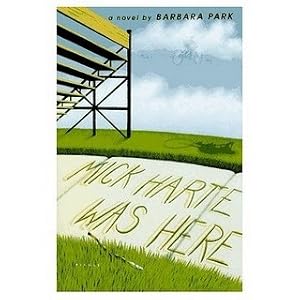
There was one particular book I would not stop reading as a kid - Mick Harte Was Here, by Barbara Park - and when I look back on it, it's sort of weird and morbid that the book I read over and over again was a book about death. A short, middle grade book about a girl whose brother dies in a bicycle accident when they're in middle school. I just reread it last night, and I realize now that one of the reasons I probably loved it so much is the voice. It feels like a friend talking to you, like someone you know and care about, so you want to hear their story, however sad it may be.


But when I was doing an assignment recently for class, I ended up writing about how I often felt creatively cursed by my relatively easy childhood, because I didn't have some huge catastrophe or deeply emotional experience I could call upon as a muse when writing. Only now am I realizing that I probably wrote about death so much in my stories because, for such a long time (truly a blessing), no one close to me had passed away. I was scared of when it would happen, because I'd had no experience with it, so I explored it through writing. And books, I'm realizing - I was drawn to Mick Harte Was Here because it explained how someone dealt with death, one kid to another.

So I'm wondering, has this happened for anyone else? Have you found yourself zeroing in on certain topics or themes in your writing and the books you read because a specific relation they have to your life - even without you realizing it?

And if you can get your hands on that book, I recommend reading it - it's a quick read and full of heart, even so many years later.

Thursday, March 3, 2011

Plans Aren't Mutually Exclusive

Despite the fact that my cognitive psychology class is currently making me question every memory I think I have, there is one conversation with an aunt of mine I remember very clearly. We were discussing what I wanted to be when I grew up, and when I said an author, she said, "But what if you don't become an author?"

I was probably 12 or so at the time, so I was old enough to know that becoming an author was by no means a laid out career plan, but still young enough that I was idealistic. I didn't want to be asked such a realistic follow-up question. Later that day, I wrote about it in one of my many spirals. But I didn't write about the conversation. I wrote, "How am I ever supposed to achieve my dreams if I'm planning for when I fail?"

It wasn't my aunt's intention to crush my dreams or anything. She was just being practical. And though my reaction was that of an idealistic kid, I think it has some practicality to it, too. To someday achieve a dream, you have to believe in it enough to make it Plan A. That doesn't mean it's become an author or be homeless. It's not either or.

Never has this whole conundrum been more apparent to me than now, as my college graduation nears. I think I'm more excited than most of my peers (I hate that word, but it's the best description) for graduating, but I'm not set with a job and a plan and a career all laid out like some of them are. And it's okay. Because at some point when I decided to major in Creative Writing instead of something more practical, I knew this day would come.

And being an author is still my dream. Still Plan A. But what I'm realizing is that pursuing Plan B isn't about giving up, or about failure. It's about practicality. It's about acknowledging that the only way to pursue Plan A is to first find another way to provide for myself. It is not either or. It's Plan B and keeping at Plan A, just at the same time. I haven't failed yet. The only point at which I'll have failed is the moment I stop trying.