rss
twitter
Showing posts with label books. Show all posts

Monday, February 6, 2012

So Many Books, So Little Time For Rereading Them

People ask me often -- especially those who are helping me move -- why I keep as many books as I do. My uncle, when lugging another box of books up the three flights of stairs to my new apartment last summer, said, "But you've already read all of them," when I apologized for how many boxes of books there were.

And it was true. Outside of maybe one or two boxes, I'd read all the books. And I'd love to say I keep them all so I can reread them on a whim, but most I probably never will.

There's this undeniable comfort for me to be surrounded by books. It's not always that I'm going to go reread that book in the bottom corner of my bookshelf, but just that I have the option to. That no matter what is going on in my world, I'm surrounded by countless others.

In just the past week, upon hearing the news that Wislawa Szymborska had passed away, I was able to find my copy of View With a Grain of Sand and read a few of her poems. I was introduced to her in a Polish culture class in college and really enjoyed her poetry.

From Amazon.com
Then I decided to reread Jandy Nelson's The Sky is Everywhere, and when I found it on my shelf I first noticed the tabs sticking out the side, marking some of my favorite quotes. I read the first paragraph and remembered the voice that made me fall in love with it the first time, then fell in love with it all over again.

So I wonder, what makes you decide to reread a book? Do you keep a lot of books around, in case the desire to reread one strikes you?

To be honest, most of the time I don't reread books because I feel overwhelmed by all of the other books out there I want to read and haven't found time for yet. But sometimes I love one so much, I want to get lost in it again. This past week in particular, I had just read a series of meh books -- ones that I enjoyed but hadn't really consumed me. I was waiting on a bunch of books from the library and just wanted to read something I would truly love, so I turned to The Sky is Everywhere.

I'm excited that it's 2012, because I've decided that the only way to exist in this world is by rereading all of Harry Potter, in order, every two years. When someone finds a way to add more hours to the day, I'll allow myself to read them every year. But, well, we're stuck with 24 hours, and I last read them at the end of 2010, so I, for one, am psyched about 2012.

What books have you reread lately? Are there any you read regularly?

Saturday, December 31, 2011

This New Year, Keep On Dreaming

I'm not a big New Years Eve person. Growing up, I spent most of them with family friends playing cards into the early hours of the morning, only pausing for a few minutes to acknowledge the clock striking midnight.

And I don't believe much in New Year's resolutions, because I believe that if someone wants to change something enough, the turning of a calendar page isn't going to matter. All the power to everyone who makes resolutions and keeps them -- they're just not for me.

So I'm excited about 2012, but only because I'm excited about life in general and not because I'll write a new year at the end of dates.

I'll always remember 2011 as the year I graduated from college and started life in the real world. The year my Rangers came within a strike of winning the World Series -- twice -- and broke my sports-heart instead. They had me sliding down a couch to the floor with my hands on my head shouting with my dad in disbelief, and I couldn't forget that even if I wanted to. Even if I tried. Because it was one of the greatest games in the history of baseball and they'll talk about it for decades to come.

It is the year I read more books than any other. A year I learned important things about my writing and took some major strides.

But there's one thing I like to learn anew every year. Something Stephen Colbert reminded me of in his commencement speech (which I talked about here). And that's the importance of dreams. To always dream about something, always strive for something. To take every failure, put it in your back pocket, and declare that you'll never give up.

So on that note, I want to share this song by one of my favorite bands:


Happy New Year everyone. I hope you keep on dreaming, even if it breaks your heart.

Friday, July 15, 2011

What I Learned at Midnight

I went to my first ever midnight movie last night, and we all know what it was. I'm not a huge movie person in general, so I've never felt it was necessary to go see one at midnight before. But I absolutely love Harry Potter and well, if there was ever a movie to see at midnight... this was it.

I expected the costumes and the crowds and the general craziness, but I still think I underestimated it all. I didn't expect the theater to clap for seriously every preview, for example. I didn't expect to be one of the last people to find their seats... an hour and a half before the movie began. (This post is free of movie spoilers by the way, in case you were worried!)

From pastemagazine.com
Here's the part of the story where I sidetrack for a moment (bear with me). When the first Harry Potter movies came out, I didn't go and see them in the theater. There were still books left, so the movies didn't interest me in the least. But eventually I saw each one, and after the seventh book came out and I had savored it, I began to anticipate the movies because, well, it was all that was "new" that was still left for Harry Potter. The movies meant this thing that had accompanied me and so many others through their childhoods wasn't quite over yet.

So I was at the movie last night, and at one of the funny lines the whole theater laughed. But they laughed too long, and I missed the next line. I don't like to miss things (unless it's a movie I've seen before, or don't like, in which case I talk through the whole thing. Hypocritical, I know...) so I was annoyed by this. And as the movie went on, cheers would erupt, and then at the next little victory the cheers would be louder. Then even louder at the next one. And my friend that I went with was sobbing beside me so much my chair shook.

And even though there was the unmistakable pressure behind my eyes of building tears, they never fell. Everyone else around me was so present, they were distracting. They made the moment one I had to share, so I didn't have enough time to process anything for myself. I didn't have the chance to decide that this particular moment was one worth shouting about. Everyone else decided it for me.

And that is one of the reasons I will always love the Harry Potter books (and any book, really) more than the movie. Even the best movie that could ever be made. Because when I read, I'm isolated in this world that feels like it has been created solely for me. I get to decide if there was something 200 pages back I need to confirm now that I know something new. I get to decide that this moment is so troubling and heartbreaking I can't help but cry. I get to dwell on a line that strikes me and find a post-it note to mark it with so I can write it down later. It is my world, and no one else's world in that same book will be quite the same.

One of my favorite lines from all of Harry Potter is Dumbledore telling Harry, "Of course it is happening inside your head, Harry, but why on earth should that mean that it is not real?" Books, when we read them, feel like they are entirely in our heads. But in our heads they are so alive, so tangible, that the characters can become embedded in us. Their plights become our plights. Their joy, our joy. And too often that--that realness--I do not experience when I see things on a screen.

So Harry Potter and the Deathly Hallows Part II was very well done, and very moving, and I strongly suggest everyone go and see it. But I won't be going back to the movies at midnight any time soon. In fact, I'll probably spend many more wonderful hours trapped in a book before I see whatever movie I'm going to see next, and that's precisely how I prefer it.

Also, I know I've been very absent from this blog as of late. There was this whole matter of graduating from college and moving 900 miles, then moving across town a few days later, then starting my job -- all in the span of a week. So I've been a little out of sorts, but things are calming down now, and I shall try to post more regularly. Thanks for sticking with me!  

Tuesday, May 31, 2011

Likeable Characters

I have a question for you! Something I've been pondering lately...

In the past half year or so I've read a young adult book and an adult book that deal with the main character cheating with their best friend's boyfriend. In both cases, the best friend was portrayed as insecure, needy, bossy, and selfish. Not to mention that she treated the main character pretty horribly.

So, as a reader, I rooted for the main character to get the boy, despite the fact that she was betraying her best friend. She would claim that her relationship with the boy was deeper than the best friend's relationship, and of course I believed it, because that was how it was presented.

As I read the second one though, I began to wonder - how would I feel about this main character if the best friend were kind, considerate, and selfless? Would it affect how much I enjoyed the book?

I don't think I need a likeable main character to like a book, so long as the character is complex. For example, I loved Lauren Oliver's Before I Fall, and I didn't really care for the main character as a person for most of the book. She was exactly the sort of person I would have disliked in high school. But she was multi-faceted, complex, and - ultimately - she changed. She recognized the ways she was unlikeable, and she grew throughout the book.

I can't decide if I'd rather read a book where the main character cheats knowing her best friend is incredible and just owns up to it, doesn't try to defend her actions by claiming that, in some ways, the friend deserves it. I think there's a good chance I'd be incredibly frustrated with the main character. But I also think that in many ways it will feel more true, more honest. I'm sure not everyone who cheats with their best friend's boyfriend does it because the best friend is actually awful and deserves it.

So what do you think? Do you need likeable main characters?

Thursday, February 17, 2011

How far does beautiful writing go?

For one of my classes I recently had to read a book of poetry that was also a memoir, and there was one thing my entire class could agree on: the writing was beautiful. Like underlines galore, I want to let every single word dissolve into me, beautiful.

But for the most part, we also all agreed that the plot wasn't always clear. In fact, sometimes it seemed rather nonexistent. We knew that each poem was a moment of the author's life that really resonated with her, but we didn't know what was going on.

I think the best books are the ones with beautiful writing I want to underline, characters I feel like exist in the real world, and a plot that keeps making me want to turn the page even when I should be sleeping. But to find all of this in one book isn't something I happen upon every day.

My class couldn't really come to a conclusion on how we felt about this particular book we had to read, but many people said when they started over, stopped reading for a plot and just absorbed the writing, they really enjoyed it.

So can you do this? Can you enjoy exquisite writing for just the writing? Or do you need some semblance of plot and understanding of the story to keep reading?

Tuesday, January 25, 2011

A very scientific calculation of good books vs. great books...

I read at least once a day, before I go to sleep, regardless of the day or hour. But in the hours outside of that designated reading time, I can calculate this:

The difference between a good book and a great book, as portrayed by my thought processes.

Good book:
I actually have some free time! What should I do with it? Is there anything good on TV? Anything I can do to get ahead on homework? Oh, I could read my book for awhile.

Great book:
I have a million things I need to do. There are NOT enough hours in the day. Gah gah gah. But I MUST find time to read this book!! *Ignores everything else and reads*

Monday, January 24, 2011

Mean Girls, Realism, and Young Adult Books

It took me years to watch Mean Girls, and let's just say it wasn't instant love or anything. So how I ended up watching some of Mean Girls 2... I have no idea. I'm going to blame it on the lack of baseball at the moment.

Even so, my mind somehow related the movie to writing. There was a scene where a girl got food splattered all over her, and everyone in the cafeteria pointed at her and laughed. Literally. Pointing fingers and many over-exaggerated chuckles and all.

The thing is, there was a two-week period in my junior year when the same friend of mine got hit by food at three different lunches. We weren't the "losers" or anything (my high school was surprisingly diverse and well-mannered). I'm 99% sure the food wasn't even aimed at our table, unless as a joke. And it always happened right at the end of lunch, so there was a lot of mayhem with everyone leaving and we couldn't figure out where it came from. One time it was a barbecue sauce type substance, one time it was some sort of jello that had something inside of it. We all used our thinking caps (AP students that we were), tracked down a spare shirt in one of our gym or dance lockers, and got her changed and to class relatively on time. (In fact, after she was late for the third time, our crazy Calculus teacher joked she should start wearing a raincoat to lunch.)

I am still convinced that the three occurrences in such a short time period and the fact that it always hit the same person even though we were in different seats was a mere coincidence. Frankly, we thought it was hilarious. And my whole point is, no one else really even noticed what happened, much less pointed and laughed.

I think high school is a very important period of life (no matter how desperate I was to move on to college), and that's a large part of why I write contemporary young adult. So many things that happen in high school are amplified in our minds, becoming the most important or disastrous or embarrassing thing that has ever happened. EVER. And that's what makes it so interesting.

High school is a terrifying time all on its own. But for some reason, movies like to amplify this. They make the universal cliques more distinct, the embarrassing moments ten times longer and more ridiculous, the teachers crazier, and on and on. The stories that are told about high school are important, but I believe they can be told realistically, too.

I think there's a quote saying something to effect that fiction has to be more realistic than real life, because it has to be believable. That makes perfect sense. And I think this is something that young adult books are better at than movies. I also think the importance of this shouldn't be overlooked. When something is the right amount of realistic, it's relatable. And, at least for me, when I can relate in even the smallest way, that's when something I read has the most effect.

So, digging into all the crazy and twisted things that assuredly happen in high school and how they affect people, I'm all for. But over-exaggerating events to the point they're hard to watch? Please, for the love of books, leave it to the movies.

Note: I am speaking specifically about contemporary/realistic books - not fantasy or sci-fi or the like, which each work in their own ways with their non-realistic elements :)

Tuesday, November 16, 2010

I Write To...


"'Write to save yourself,' Athos said, 'and someday you'll write because you've been saved.'"
            -From Fugitive Pieces, by Anne Michaels

I came across this quote while reading for class, and it struck me as very true to my life. I used to say that I wrote to understand my world, and I read books to escape it. In large part, that is still true. But I think my "someday" is closer, or maybe even now.

I have a shelf of spirals at home filled with angsty poems and paragraphs of random musings that I am embarrassed of, but I wouldn't wish them to not exist. There were so many times I didn't know how I felt about a situation until I read what I'd just written. The words in those spirals got me through many years in which I felt lost, confused, and sometimes even unloved.

And all the books on my shelves gave me insight into worlds I couldn't be a part of in my own life, while letting me escape my life for as long as it took to read the words on the pages I held.

I always knew I wanted to be an author, from the time I was five years old. But I spent most of my life writing things that weren't even remotely close to novels or even publishable poems. And that's okay, because writing made me the person I am and got me through everything I encountered in life.

But most of what I write now isn't musings on my life. It's not random observations or lines about the boy I have a crush on. Somewhere along the way, my notebook became filled with short stories and novel ideas. My focus changed to writing something that will ideally allow a teenager to become engrossed in a book for a while instead of whatever is going on in life.

That, more than anything, is my dream. Because words saved me.

Why do you write? Can you identify with that quote, too?

Monday, September 27, 2010

Things I wish I'd written...


I have two quote notebooks - one for quotes I love because of what they mean, and one for quotes I love because of the writing. These don't necessarily have a point I want to remember, or find inspiring, but are constructed in such a way that I can only marvel them and hope to learn from them.

I thought it might be fun to share some of those quotes with you this lovely Monday! And if you have any of your own, please share them with me!


"This is real. Unlike the Pea Island beach day and the magic fish, the bad feeling of this day remains. Details fade. For a couple years, she’ll remember her mother’s slippers brushing the kitchen tile. She’ll remember the Carolina blue of her father’s baseball cap. The rest is batter. It’s all mixed up, and none of it tastes good." - The Handbook for Lightning Strike Survivors, by Michele Young-Stone


"She feels small, not small how she felt on the beach with the ocean and sky; not small like she was part of something great and beautiful, but small insignificant, like an ant or slug squashed, unnoticed."- The Handbook for Lightning Strike Survivors, by Michele Young-Stone

"Now I wonder if it gets tiring, bearing witness to the last gasp of nature. If it's not only plants my son hears but the gnash of an angry ocean. A shy sunrise. A breaking heart." - House Rules, Jodi Picoult


"The silence was unusual, and we were not entirely sure how to talk about it - not because it was too grave and not because it was too trivial, but because it seemed grave one moment and trivial the next, and so no one was quite able to decide whether it mattered enormously or not at all." - "The Year of Silence," by Kevin Brockmeier


"Norman Bowker smiled. He looked out across the lake and imagined the feel of his tongue against the truth." - The Things They Carried, by Tim O'Brien


"Our house looked the same as every other one on the block, but it was not the same. Murder had a blood red door on the other side of which was everything unimaginable to everyone." The Lovely Bones, by Alice Sebold

Wednesday, September 22, 2010

A "Screaming" Voice

Whichever part of my brain decides which book I read next deserved a high five a couple of weeks ago. I was contemplating voice, and what it means for a novel to have a strong voice. Sometimes this seems so simple to me - voice is just... the author. Two writers can take the exact same conflicts and plot and will not write the same story. The difference between the two, among other factors, is their voice.

It's one of the things I can't come up with a tangible explanation of...voice is just...voice.

Which was why questioning what voice was and if my writing had it was so frightening. Until I read two books in a row that screamed - yes, screamed - voice.

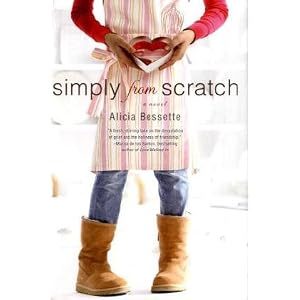
First I read Simply from Scratch, by Alicia Bessette, which I actually won over on her blog by telling one of the worst baking disaster stories (who knew it would benefit me someday!).

Then I picked up Cracked Up to Be, by Courtney Summers, from the library and read it in a couple of days - meanwhile telling every one that I was tired because the book I was reading was too captivating to put down.

That's the word I'd use to describe the voice in both of these books: captivating. The narrators felt so real and unique I couldn't stop wanting more.

In the midst of my "voice crisis," if you will, these books confirmed for me that voice isn't easy to adequately explain, but it is very easy to spot.

These two novels are in first person present tense, which I think is difficult to write but also lends itself to a strong voice. When I read books in that style, the narrator seems to come alive quicker for me. However, voice is still often well executed in other styles, these just both happened to be in the same one. Although Simply from Scratch had some sections in the third person point of view of a minor character, and those sections had just as strong of a voice for me.

Now Simply from Scratch is Bessette's debut novel, and Cracked up to Be is the only Courtney Summers' book I've read, but I'd be willing to bet that their other books have similar captivating voices that are still distinct to each of the main characters.

I think that for me, voice is the difference between a well told story and a story that comes alive, existing beyond the page.

But since I was having such a hard time coming up with what exactly voice is, I looked for some help and found these quotes... 

"A writer's voice is not character alone, it is not style alone; it is far more.  A writer's voice line the stroke of an artist's brush- is the thumbprint of her whole person- her idea, wit, humor, passions, rhythms."  Patricia Lee Gauch

"A good style should show no sign of effort.  What is written should seem like a happy accident."  W. Somerset Maugham

"It is the aspect of the novelist's work that asks to be read out loud, which appeals not to the eye, like most prose, but to the ear; having indeed this much in common with oratory....The story, besides saying one thing after another, adds something because of its connection with a voice." - E. M. Forster, Aspects of a Novel

How do you define voice? Have you read either of those books, and did they "scream" voice to you?

The pictures are linked to their source - their Amazon page.

Saturday, August 28, 2010

Books and Baseball - and why they matter

There are three things I love in the hobby/passion category. Writing, reading, and baseball. And I mean LOVE.

Now, the first two you could probably guess, seeing as they are the focus of this blog. The third I assume you don't care much about, so I try not to talk about it. But I'm going to today, so bear with me, please, because I will bring it back to the first two.

I am obsessed with baseball, and more specifically the Texas Rangers. For those not in the baseball know, the Rangers are traditionally awful. As in, in their entire existence, they have won one single playoff game. That's bad.

But I still love them, and I love the game. I won't bore you with why I love it, and why I think it is better than any other sport. What you need to know is that there are 162 games in the season, and I watch most or all of about 90% of them, if not more. I even regularly watch games that the Rangers aren't playing in (such as right now...).

I get into the games. Even when I'm watching one alone, I talk to the TV and the players and I pump my fist in the air. I have gotten goosebumps when reading articles about the Rangers, found myself unable to breathe over the excitement of an important win, and screamed in frustration.
Yea, I kinda love Texas...

But every now and then, when I'm watching a game, I think, what's the point? Why are thousands of people watching a group of guys getting paid millions of dollars to play a game.

Plain and simple, it might just be a game in the literal sense, but it is so much more than that. Major League Baseball has a series of ads with the slogan, "This is Beyond Baseball." And so much of it is. It's about a team working together, persevering, defying the odds. It's about thousands of people coming together to cheer for the same outcome. It's about a pitcher going out every day with a chance at a perfect game - no matter what happened in the past - in a game where perfection isn't the goal. No team will ever win 162 games. Even the best teams lose at least 60 games each season.

Baseball (and any pro sport, I'm just using the one closest to my heart), at its basic level, is an escape. Whatever is going on in your life or in the world, you have three hours where your team winning is, for the moment, all that matters. You can find joy in their success and sadness in another losing season.

And really, at the end of the day, how is this so different from books? I once had a roommate who believed that books were pointless and their existence did nothing to better the world. I was furious, not to mention hurt. This thing that I loved, devoured in my spare time, and endeavored to create myself could not be useless - that much I knew.

So why aren't they? I can see how, to someone who finds no pleasure in reading, all the books in the world can seem like wasted space. Except you and I know that books are quite the opposite. So why?

From www.freedomlab.org
Books are magical worlds that take us somewhere outside of our own. They introduce to us people we may never have the chance to meet, and sometimes people who remind us of someone in our life - or even ourselves.

Books make us think about life and the world we exist in. They make us ache and cry and laugh. They keep us company when we're lonely and become our friends, which we then want to share with our real life friends. Books can unite us and inspire us.

And, like baseball, they are an escape. They give us an opportunity to stop thinking about our own lives and immerse ourselves in someone else's. They enrich our lives, yet still give us an opportunity to get away from our life.

Which brings me to writing, and why writers (and baseball players) aren't wasting their time, even if the world as a whole may not always agree on that.

Someone has to write the book. Someone has to write the words that uplift and challenge and entertain. All it takes is
one
word
at
a
time.

Wednesday, August 11, 2010

I love books. These are my random thoughts about them...

I currently have three books beside my bed, partially read. And as I read a fourth book, I've been thinking about what makes me stop reading. (For the record, though, I do intend to finish each of those three - just bit by bit.)

The reason is the same as when I was a teenager and scoffed at essentially any genre other than murder mysteries. No matter how wonderful the writing is, I have to be sucked in by the third page or it will take me weeks to finish a book. A good book I'll read in a day (given there is the necessary time). For example, on recent Saturdays I read Lauren Oliver's Before I Fall and Jodi Picoult's House Rules, each in less than 24 hours. Neither are short. Neither are murder mysteries.

But before I go on I must go back to my junior year of high school to a conversation I had with my english teacher. When I told her I had never stopped a book in the middle, she said, "But there are so many other books out there you could love, why waste your time on ones you don't?" I pondered this statement, then put down Hemingway's The Sun Also Rises and never picked it up again.

Here's the thing - clearly Hemingway is an excellent writer. I'm not saying he isn't. But when I'm not invested in a book (which I wasn't with Hemingway), it takes me a while to read even though I read every day. So when I have shelves of books in my house I am itching to read, why am I forcing myself through a different one?

My bookshelf once upon a time... LOOK - it's The Sun Also Rises
In the end, I think it was pride. But there is another reason to keep reading, too. As an aspiring author, the best way to learn how to write is to read good writing. Let's take, for example, one of the half-read books beside my bed right now: Atonement.

I have passages galore highlighted in it, but I have little motivation to finish it. The writing is beautiful and stunning and I can learn from it, but the plot has taken forever (at least in my opinion) to develop and I'm still not really sure why I should care about the characters.

Somewhere around the end of middle school I couldn't find books that held my attention anymore, so I turned to murder mysteries and legal thrillers. From page one these books have suspense, so even if I wasn't crying over characters I was at least racing through the pages. I read every single Mary Higgins Clark and John Grisham book that existed, then discovered the plethora of other authors in the same genres.

Eventually, I began branching out again. I can't choose a favorite anything to save my life, but I can tell you without regret that my favorite book is The Lovely Bones, by Alice Sebold. Why? Well, I talk about that here. Not a murder mystery at all, but from page one I was drawn in and couldn't put it down.

Now I read a murder mystery only on a rare occasion, because that is not a genre I will ever write in so I do not need to be familiar with it. And I now find that a much broader range of books (and I mean BROAD, from chick lit to dystopian YA to non-fiction accounts of Mount Everest and Ebola) can suck me in and earn my devotion.

I truly believe that every person in this world could love reading, if only they found the right genre. Case in point: my mother. She never enjoyed reading. My entire life I never saw her read and finish a book. But she loves sewing, and in the past year she discovered a few series involving quilters and mysteries - and she's read several of them. She has been eager to read them, and tell me about them, and find more of them. I think that many of the people who tell me they don't like reading or don't have time for it have just never taken the time to explore books outside of what is required reading at school.

So what is my point, exactly? I'm not sure. In all honesty, I was about to go to bed. But in summary...

  1. I think it's okay to stop reading a book in the middle...
  2. But even a book you don't particularly love can still teach you something valuable.
  3. Different genres, perhaps, are suitable for different parts of our lives...
  4. and the reason there are so many different types of books is because we all have different tastes!
So what is your policy on not finishing a book? What makes you stop reading, if you do? Has your taste in genres changed over time? Seriously, I'd love your thoughts!

Thursday, July 1, 2010

Falling In Love...With a Character

More than once in my life,  I've finished a book and felt like one of the characters was out there somewhere still, if only I could find them. But I never can. And eventually I have to accept that when the book is over, my time with that character is up.

When I read The Lovely Bones, by Alice Sebold, I sat still, alone, for thirty minutes. I was hoping that if I didn't move Susie Salmon didn't cease to exist. And since she didn't exist anymore - since what was in those pages was all I was ever going to know about her and her family - I had to figure out how to go on with my life. It sounds melodramatic, I know, but it's truly what happened. Perhaps, then, it isn't hard to believe that even though I find it nearly impossible to choose a favorite book, that one is definitely high on the list.

Actually, here's something I wrote shortly after reading that book...
A weird feeling usually comes over me when I finish a book. The characters within it are forever frozen in time, and I am left only with reality. My first instinct is to go read another book, become lost in new characters, and travel to a new world. But then I feel somewhat guilty for leaving the last characters behind so quickly. I think, though, that just as there are moments and people in my life I will never forget, there are characters, chapters, and novels that not only changed me but will always remain a part of me, as though they existed beyond mere words placed on a page.
It's obviously happened with other books, too. I kid you not, one night I was praying and thinking through everyone I needed to pray for, and nearly prayed for a character in a book I was reading who was really struggling. Nearly, but just in time I remembered she was fake. 


As an aspiring author, that feeling I've had about characters is one I certainly want to give a reader. And as always, I think the best way to learn how to write that is to look at the books that accomplish it. So how do authors create characters that we can't forget? How do they become so real?


I've thought about it a lot, and I think one of the most important requirements for me is that the character must be relatable. I clearly don't want their life to be just like mine, because half the joy of reading is exploring the unknown I might otherwise never get to see, or perhaps doesn't even exist anywhere (cough cough, Hogwarts). But for me it's important that some aspect of their thoughts, actions, motivations, or personality makes sense to me so that I feel like I am experiencing every thing that doesn't make sense along with them.


Take Susie Salmon, for example. I clearly have not had all my body parts cut up and thrown away. And, believe it or not, I'm not writing this from the afterlife (Shocking, I know!). So how did I become so attached to her? First of all, her voice. She's young and innocent. She's upset. And she's watching her family deal with life in her absence. I couldn't relate to her circumstances, but I was right beside her as she watched life progress on earth. I understood why she had to watch, and that was enough.


So what makes you love a character so much you never want the book to end? And how do we, as writers, go about accomplishing that in our own works?

Tuesday, June 22, 2010

Rome - erm, Books - Wasn't Built in a Day

So there's that old adage, Rome wasn't build in a day. Well, neither are books.

Unless you're superhuman, or can somehow keep your fingers typing for 24 straight hours (and even then I'm not so sure it's possible), you can't write a novel in a day. In the midst of my WIP, there are days I wish that it was just done - that today I could just sit down and finish it (even though it's only halfway done). Not because I'm not loving writing it, but because I want to see it all put together, then tear it apart and make it better.

But here is what I realized - it's a really REALLY good thing I can't write it all in a day.

How many times already have I come up with a scene idea while walking to the bus stop, or reading something at work, or hearing a song? A LOT, in case you were wondering.

While the fundamental idea for my novel has stayed the same, the little bits and pieces that (hopefully) will make it come alive and seem real aren't things I could have come up with writing the whole thing in one sitting.

I have a list of all the major things that are happening between where I am now and the end, and some of those scenes are even somewhat written because they wouldn't leave me alone. I also have sticky notes of various ideas pulled from those life moments that I was just mentioning, followed by lots of question marks. Because there's still so much to be written, and I'm glad there are a lot of days to live between now and when it's done.

Rome wasn't build in a day. My opinion? Embrace it.

So, I'm curious - what are some of the ideas you've come up with when you weren't actually writing? Are there times you wish you could speed up the initial process, or do you enjoy it?

Wednesday, May 5, 2010

Failure is nothing to fear


Since Kindergarten, I've always known I wanted to be an author. But lately, I had a freak out. I convinced myself that I wasn't cut out for being a writer, and that maybe I'd always do it on the side but it wouldn't be my profession. I think what really happened was I decided I couldn't do it, and I didn't want to actually have to fail.

Well, I've come to my senses. I'm pursuing my dream. In fact, I started that process years ago when I decided to go to Northwestern University with the intention of being a Creative Writing major, which, let's face it, does not lead to a stable career and salary upon graduation. Now that I was accepted into the program, have been in it for a year, and am about to be a senior, I had the "oh no what am I actually going to do with my life freak out."

Then something amazing happened. My wonderful friend, Veronica Roth, got a major book deal. Seriously. You should check out her blog, and read the book when it comes out next summer.

And what I realized is, people really DO become authors, and get published, and make a living off of it. And not just John Grisham and J.K. Rowling. It doesn't mean it will happen for me, too, it just means I need to actually try.

So, I had a hiatus, during which I was working on my novella for my writing class, and starting an internship, and thinking a lot about writing (but just not sharing it). But now I'm going to tell you everything you probably never wanted to know about what I'm writing. Hopefully you enjoy it.